

Home / Insights / Thought Leadership
Your Warehouse Has Changed. Has Your Fire Protection System?
Across the country, building owners face a growing challenge: aging fire protection and alarm systems that no longer serve the people and products they were designed to protect. While many systems continue to function, obsolete equipment, changing requirements, rising maintenance costs, and evolving building operations create the need to reevaluate systems before a failure occurs.
Let’s take a TV as an example. TVs used to be made largely of metal and glass. Today, they contain significantly more plastic. The product has not fundamentally changed from the perspective of the person buying it, but the materials used to make it have. Those changes matter in a warehouse.
The products being stored, packaging, storage methods, and technology used to move products can all affect a facility’s fire protection needs. A system that was appropriate when a building opened may not support the way it operates today.
That does not mean an aging warehouse automatically needs a new fire protection system. The good news is that Henderson Engineers has extensive fire protection knowledge that can help owners understand what they have, what’s changed, and whether their systems still align with current operations.
What Can Trigger a Fire Life Safety Review?
There is no universal timeline for reevaluating a warehouse’s fire protection systems. The right time depends on the facility and how it is being used. For owners and operators, we recommend starting with changes to the building and its operations.
What you store
A facility may store different products or materials than it did when the building was designed. Even changes to an existing product can matter.
A switch from wooden pallets to plastic pallets, for example, can affect fire protection requirements. Changes in packaging, case sizes, or the amount of plastic in a product can also affect how a fire behaves and how an existing system responds.
How you store it
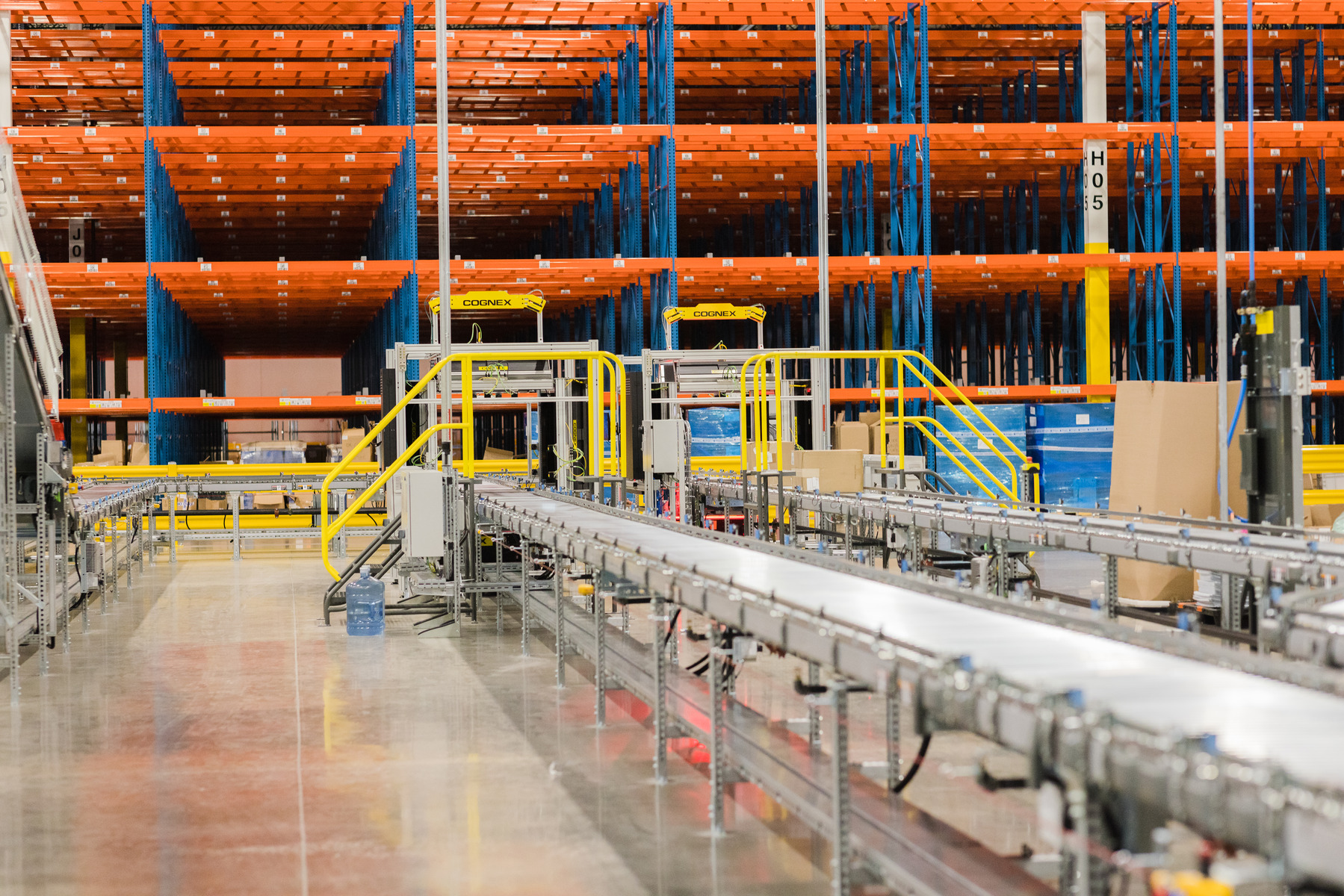
Storage height, rack configuration, case size, and storage systems all play a role in fire protection. A facility that adds taller racks or changes its storage layout may need to reevaluate its protection. The same applies when owners introduce automated storage and retrieval systems or other specialized equipment.
How you operate
Automation and robotics are increasingly common in warehouses, but integrating that technology into an existing facility is not always as simple as adding equipment. Depending on the system and how it changes the building, an owner may be able to modify existing fire protection infrastructure. In other cases, the changes may require a more significant approach. Renovations, expansions, and changes in tenant occupancy can also create new fire protection considerations.
Fire Life Safety 101: Know Your Systems
Before deciding what to upgrade, start by understanding what is already in the building.
Fire Alarm Systems
Fire alarm systems detect and communicate a fire so occupants and emergency responders can act. In an older facility, however, the system itself can become a source of concern.
Common issues include:
- Obsolete fire alarm panels with limited replacement parts
- Frequent nuisance alarms and maintenance calls
- Components that are difficult to replace
- Challenges expanding the system during renovations
- Limited monitoring or diagnostic capabilities
- Difficulty finding technicians familiar with legacy equipment
Manufacturers eventually discontinue older panels, devices, and other components. When that happens, a routine repair can become complicated and expensive. A single failed panel or hard to find device can force an emergency replacement project, creating unexpected costs and disrupting operations. The aging of systems is a major part of what we would review with an owner. Having up-to-date system is critical to the safety of all personal and products.
Modern fire alarm systems can give owners more flexibility and reliability. Depending on the facility, upgrades may include intelligent addressable technology for more precise incident identification, improved monitoring and diagnostics, easier expansion, integration with building systems, stronger cybersecurity protections, and reduced maintenance requirements.
The right solution isn’t always a complete replacement. Targeted upgrades may address reliability or obsolescence concerns while allowing portions of the existing system to remain in service.
Fire Sprinkler Systems
For warehouses, the sprinkler system is one of the most important parts of life safety strategy. It is also one of the systems most directly affected by changes in what and how a facility stores products.
Common issues include:
- Corrosion or deterioration in sprinkler piping
- Aging valves and supervisory devices
- Storage changes that no longer align with the existing sprinkler design
- Renovations that require system reconfiguration
- Changes in occupancy or use
- Fire pumps or controllers that are at end of life and need replacing
- Systems that are difficult or costly to maintain
Modernization can take several forms. It may include replacing deteriorated piping, upgrading valves and supervisory devices, improving monitoring, updating fire pumps and controllers, or reconfiguring systems to support new operations.
In some cases, dry or other specialty systems may provide the right solution for a particular application. The important point is that there is no single sprinkler solution for every warehouse.
“We Have ESFR, So We’re Covered.”
We sometimes hear from clients “We have ESFR, so we’re covered.” This is a big misconception. Having an early suppression fast response or ESFR system does not automatically mean a warehouse can store anything and everything. What you store matters, but so does packaging, pallet type, storage height, and configuration. And while having a specialized fire sprinkler system designed to rapidly suppress fires in high-risk storage environments is a great, sprinkler systems are designed around specific conditions and are not a one-size-fits-all solution.
A tenant cannot necessarily move into a building, see an ESFR system, and assume the facility can accommodate any product or storage arrangement. This becomes especially important when a new tenant moves into an existing warehouse. If the tenant’s products or storage methods differ from what the existing system was designed to protect, the facility may need additional evaluation and protection.
Understanding the existing system before signing a lease, changing operations, or bringing in new products can help owners and tenants avoid expensive surprises.
What Does an Upgrade Actually Look Like?
Aging does not automatically mean replacement. The right solution could be a targeted repair, a system upgrade, a partial replacement, or a larger modernization project. It depends on the condition of the existing system, current operations, and future plans.
A proactive assessment can help owners answer four important questions:
- What condition is our system in?
Are there obsolete components, recurring maintenance problems, corrosion, or other known deficiencies? - Can our system support what we do today?
Do the existing fire alarm and sprinkler systems align with current products, storage, occupancy, and operations? - Can our system support future changes?
Can they be expanded or modified to support planned renovations, automation, increased storage, or new products? - What should we prioritize?
Understanding the answers can help owners prioritize capital investments and coordinate improvements with planned projects.
Plan Before a Failure Forces the Decision
One of the most expensive ways to modernize a fire protection system is to wait until something fails or wait until a system has aged out completely. A proactive assessment gives owners time to identify immediate and long-term risks, prioritize investments, and phase improvements around warehouse operations. Instead of discovering that a critical fire alarm panel is no longer supported or that an existing sprinkler system cannot accommodate a new tenant after a project is underway, owners can build modernization into their capital planning.
Planning ahead can also reduce disruption. Our team can address the most urgent issues first, so owners can then budget larger replacements over time, and coordinate work with renovations or other planned facility improvements. By understanding what your risks are in your current systems, owners can avoid significant downtime as well. And when speed to consumer is often the name of the game in warehouses, unplanned downtime can lead to significate revenue loss.
More Than a Replacement Recommendation
Owners often receive fire protection recommendations from multiple parties, and sometimes those recommendations don’t align. A fire life safety and code consultant can take a broader view and look at both the operations now, and what changes are coming in the next five to ten years.
Henderson’s fire protection designers can evaluate existing fire alarm and sprinkler systems, identify code, reliability, maintenance, and lifecycle concerns, and help owners understand how proposed changes affect the facility as a whole. Our team can also consider future plans and use modeling to help owners evaluate their options and create a more resilient facility. By investing in operational resiliency, owners can expect less downtime with fewer emergency costs, which can be critical in warehouse operations. Even losing 24 hours of operations can cost millions of dollars.
The goal is not simply to recommend new equipment. It is to help owners determine what the facility needs, what can remain in place, what should be upgraded, and what should be planned for the future.
Know What You Have Before You Know What You Need
When products, storage methods, or operations change, it is worth taking a closer look at your fire and life safety systems. The first step isn’t to decide what to replace. It is understanding what you have and balance that with the current and future needs of your facility.
From there, our team can help create a practical plan that addresses immediate concerns, supports current operations, and prepares the facility for what comes next.
Fire protection design depends on the building, the products, the storage, and the operation. There is no one size fits all answer. Henderson’s fire protection and code consulting team can help owners assess existing systems, understand modernization options, and develop a strategic plan for the future.

Recent Insights
Don’t Write Off MEP Embodied Carbon’s Impact
A building’s carbon story is mostly written by mechanical, electrical, and plumbing (MEP) systems. Often, building decarbonization strategies focus on…
There’s Levels to It: Why Vertical Transportation Matters in Healthcare
Facility operators and owners often focus on clinical capabilities and patient care when planning for growth, but infrastructure tells a compelling story of long-term performance. Elevators and…